


Stories
Stories & Perspectives / University of Evansville
“I was, and am, convinced of the moral and academic necessity of sharing scientific work to the fullest possible extent with the man in the street and in the field.” – Sir Mortimer Wheeler, 1955
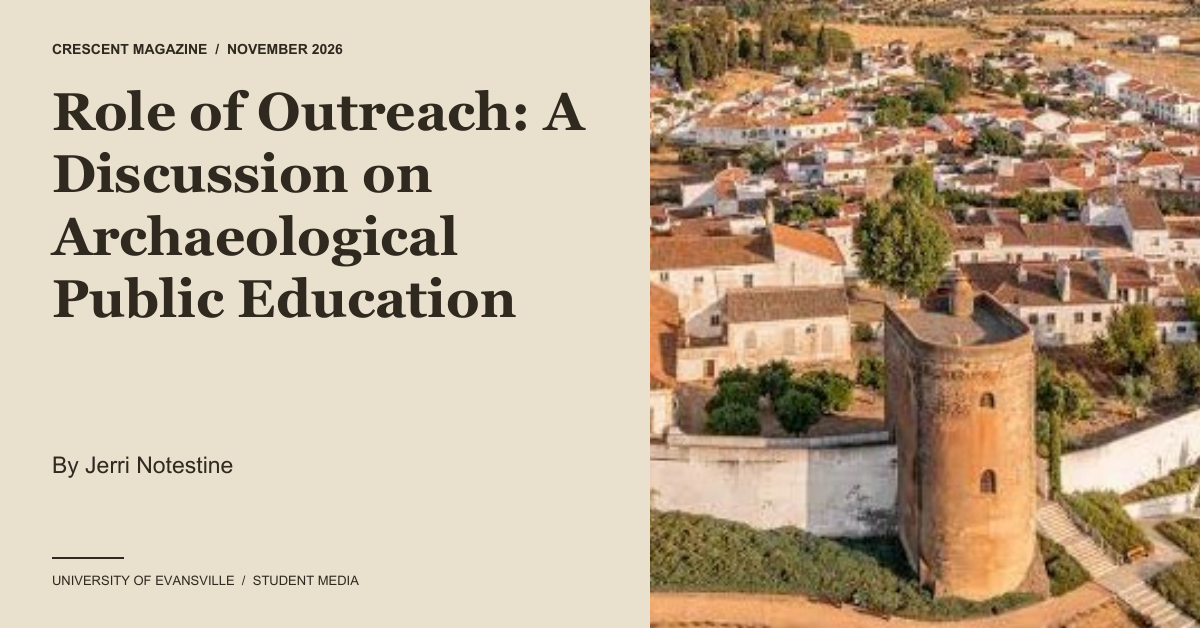
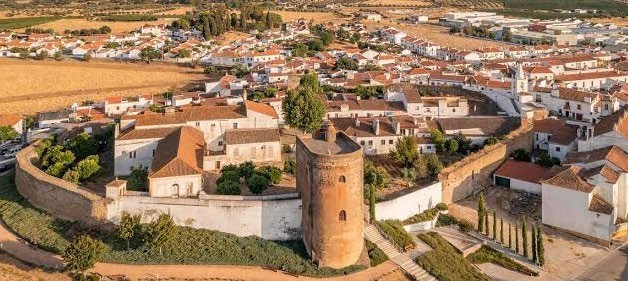
This past summer I was fortunate enough to attend field school, as many students interested in archaeology do, in Redondo, Portugal. During the month I attended, there were several opportunities to visit museums, cultural heritage sites such as Portuguese castles, see several Roman ruins, and see a ceramic shop on nearly every street of the town, selling traditional Redondo-style pieces! The amount of history and heritage that was constantly present was incredible to witness as all of it was in some way a part of Public Archaeology.
Public Archaeology, or archaeological outreach, focuses on bringing knowledge of history and archaeology to the public. While in Portugal, I had the lovely opportunity to interview local archaeologist and Cultural Resource Officer of the Municipality of Redondo, Portugal, Mr. Rui Mataloto, specially about Public Archaeology. Mr. Mataloto’s definition of Public Archaeology stated that it comes together from research and conservation, and “should be our [archaeologists] commitment to the community […] to provide explanation and narrative of what we are doing.” Transparency in research is necessary, specifically with the larger group deemed “the general public” (Mataloto). The goal ultimately is for people to know about the research being conducted and what the results mean to them, and truly I don’t believe any academic professional disagrees with that fact. But interacting with the public by means of archaeological knowledge is a broad overview, especially as it is a rather new term for the work being done.
Therefore, we must look at the different ways Public Archaeology is practiced. According to Key Concepts in Public Archaeology, there are at least 7 types of Public Archaeology, with room for many more to follow:
But by no means is this an extensive list, and some projects may even be part of multiple categories! The point is there are several ways to practice Public Archaeology, but we must think about the focus.
During the interview, Mr. Mataloto stressed the importance of community being involved with archaeology, specifically the smaller, more immediate communities. This way, people can almost immediately build a strong bond with history and archaeology, and it also keeps our field in check. “Who is archaeology for?” (Mataloto) is important for professionals to continue asking themselves, especially considering that, in the past, archaeological evidence has been misconstrued to support nationalist ideologies, political agendas, and distort identities of entire groups. However, when the immediate community is involved, the research archaeologists do is less likely to be manipulated and it allows people to become a part of something bigger, however they may wish to. I personally think just the connection to people around your community would provide an overall social benefit in a time where many people feel lonely, isolated, or constantly fighting technology. A sense of community that actively fights misinformation just by being involved is exactly what makes Public Archaeology so important to the people.
Of course there are large Public Archaeology projects around the world, mostly settling in the tourism department. Many archaeological jobs reside in tourism, and for a discussion on Public Archaeology, it is important to understand the impacts tourism has on its own local communities. While it is widely known that tourism can stimulate local economies, and some even rely on the revenue that tourism brings in, it should also be understood that it disturbs local people, violates their environment through pollution, congestion, and littering, and causes dramatic increases in the cost of living for more “touristy” areas (Leahy). Archaeologists do indirectly profit from this as many make their living in this industry or contribute to it. Because it is such a big part of encouraging people to engage with archaeological material, it should be noted that reflection seems in order.
What is increasingly important for Public Archaeology is how the rest of the field relies on it without much effort going into it, besides what has already been established. If there was no way for anyone in the public to learn about archaeology and history, there would likely be no reason for anyone to want to study it, and if there was, we come back to our point on manipulation of archaeological research to fit personal agendas (Mataloto).
“Furthermore, it may be urged that unless a larger section of the British Public [takes interest] out scient will be handicapped […] and find difficulty in obtaining state or other financial assistance for research. It is therefore of the utmost importance to the council to promote archaeological studies in general education" (Dobson et all 1944, as referenced by Don Henson 43).
Humanities rely on the public, and the public relies on humanities. Without one, the other has a crutch, and when one is suffering, both struggle. It’s more than just finances for research and general interests secures that; it’s about what archaeology provides to the public. Discovery and interpretation influence a community to be curious, to seek knowledge about the increasingly important world around them and thus think critically about it. As fluffy as that language might sound, the implications have always been dire to day-to-day life.
So, if Public Archaeology is so important, why haven’t there been more resources invested in it (said every archaeologist ever)? Truthfully, it is part of a question of finance, and part who should be doing the work. The outcome we hope to achieve is possible, according to Mr. Mataloto “but it takes time, and we need to move faster to incorporate the public”. But archaeology is a slow process that can hardly be expected to speed up. When left up to professional academics, it’s difficult to spread the word. The Ivory Tower is simply too tall and daunting for most (Abramitzky et al), so then what is the solution? “Archaeologists are not the best people to do public archaeology” says Mr. Mataloto, and thus begs the question: Who is? Do we as a field focus on our local communities instead so the professional archaeologist can be better public archaeologists? Or do we look at the addition of science communicators in a more professional way? In this setting, what is the role of the traditional archaeologist?
I do not have the answers, far from it really, as these questions may uproot systems we are set into, but I do know that nothing good ever came easy. The field of archaeology is due for some reflection if it wishes to stick around, and I strongly encourage professional archaeologists to begin this uncomfortable process.
Henson, Don. “Archaeology and Education.” Key Concepts in Public Archaeology, edited by Gabriel Moshenska, UCL Press, 2017, pp. 43–59. JSTOR, https://doi.org/10.2307/j.ctt1vxm8r7.8. Accessed 21 June. 2026.
Kate Leahy, "Is Overtourism a Problem?" National Geographic Traveller (UK), 7 Sept. 2023, Accessed 27 Aug. 2026. https://www.nationalgeographic.com/travel/article/what-is-overtourism
Moshenska, Gabriel. “Introduction: Public Archaeology as Practice and Scholarship Where Archaeology Meets the World.” Key Concepts in Public Archaeology, edited by Gabriel Moshenska, UCL Press, 2017, pp. 1–13. JSTOR, https://doi.org/10.2307/j.ctt1vxm8r7.5. Accessed 21 June. 2026.
Ran Abramitzky, Lena Greska, Santiago Pérez, Joseph Price, Carlo Schwarz, and Fabian Waldinger, "Climbing the Ivory Tower: How Socio-Economic Background Shapes Academia," NBER Working Paper 33289 (2024), https://doi.org/10.3386/w33289.