Stories
Stories & Perspectives / University of Evansville
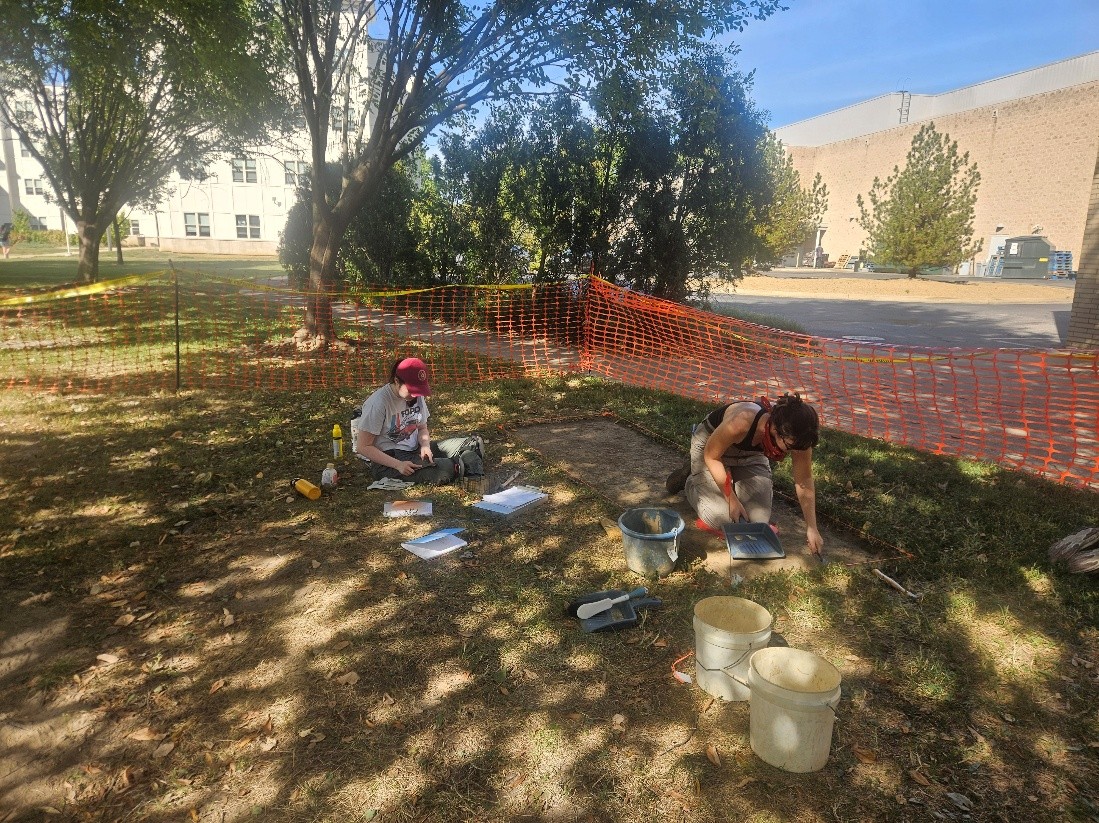
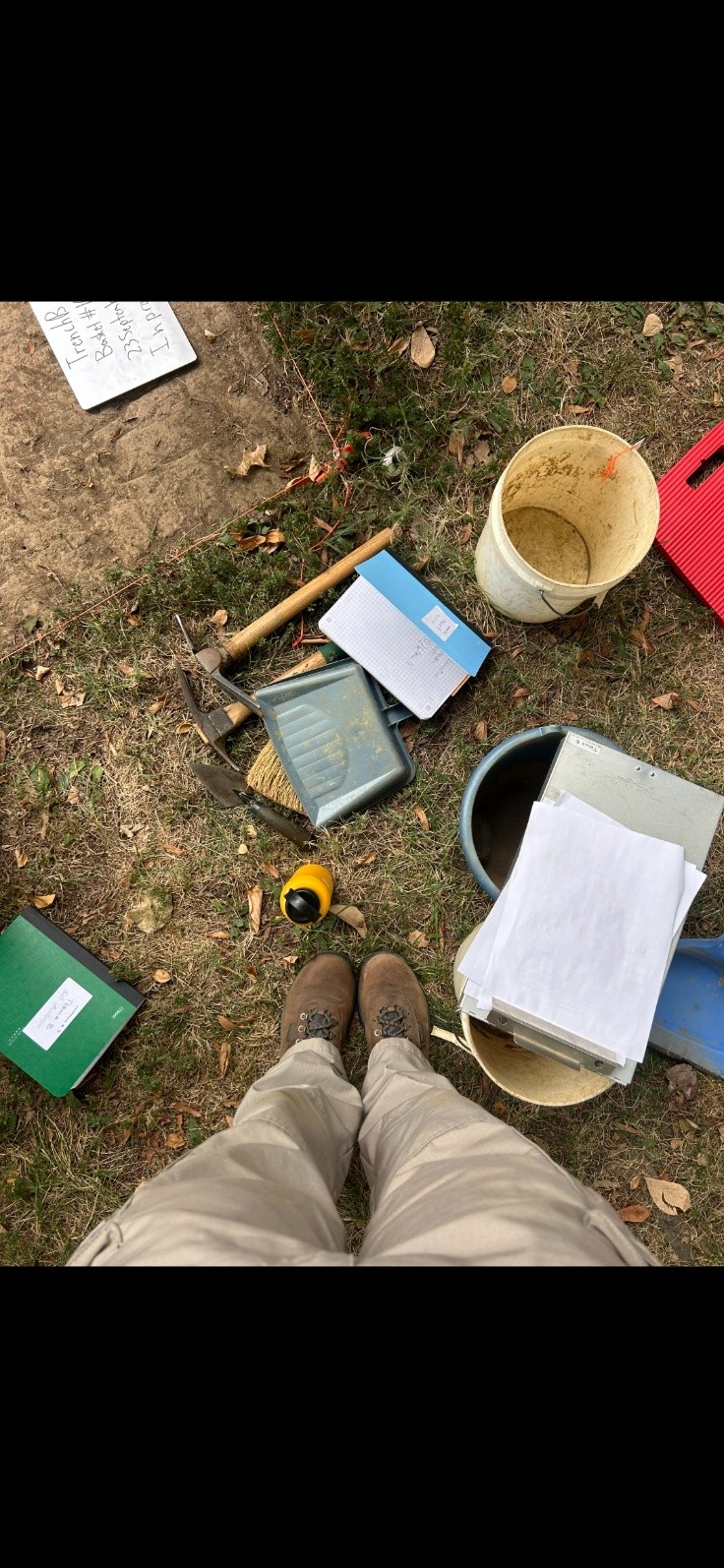
Have you happened to be outside of Ridgeway on a Wednesday afternoon and wondered what the people in the orange fence are up to? Well, I will tell you exactly what we are doing; archaeology. Archaeology is a discipline that analyzes what happened in the past through what they left behind like a big historical puzzle. Archaeologists look at fragments of pottery, the color of dirt, animal bones, charred plant remains, or any other kind of historical or ancient trash you could think of to tell the story of a site (a location with artifacts) we are interested in.
I am in Archeology 240, also known as Field Techniques, and in this class, we get to excavate (or digging to find artifacts) on campus (this is really special, we are the only school in the U.S. with an on-campus excavation site) led by our knowledgeable professor, Dr. McKay. But what are we digging for? While you wouldn’t know just from walking past, within the orange fencing was the location of a building that was on campus from before the purchase of the land for the University (so around 1919 when the university moved from Moores Hill, Indiana to Evansville) until 1971, when the building was demolished.
When the structure was first built, the plot of land that became our school was a farm. We have limited details about who owned the land and what they used the structure for. By 1923, the three-room cottage we are looking for had been transformed with the help of the YMCA and YWCA into the first location to get food on campus as well as the first dedicated event space for students. When classes finally moved to Evansville in 1921, Olmstead, the first building on campus, did not include a cafeteria, so students had to go off campus for meals. The Tea Pot Inn, as the building was formally called, or the T-Hut as students had nicknamed the building, by 1926 was small but mighty and boasted two rooms for the YMCA male students to meet and have events, and one room, the tearoom, for YWCA women was decorated with fine Japanese tea-ware, complete with electric lights.
And importantly for students, the tearoom served food (although male students had to be accompanied by a member of the YWCA to enjoy the food originally). The food options improved as the preparation was later transferred to home economics courses, allowing students to have hands on learning opportunities just like we try to stress at UE today. By 1947, the tiny three-room house with a staff of 19 was serving 1,800 students a day and the building was also expanded to have a popular jukebox room. However, the building’s importance to students was about to diminish as SOBA was built in 1948 and contained a proper cafeteria. By 1951, our excavation site began to become a temporary home for university departments in search of a better location. First, it was occupied by the music department, and then in 1962 the business department, in 1969 it held nursing, and finally, in 1971, the farmhouse/T-Hut/office building was demolished.
Now archaeology students are hoping to find some trace of all the meals, meetings, and memories that this building left behind. We hope to answer questions about the space, like what was the exact use before the school bought the building? And can we determine how the building was demolished? Is there some indication in the artifacts, rocks, and soil of the original footprints and several renovations? Since this excavation affects your green space and since the building was an important part of students’ experience in the past, we are interested in what questions the student body might have. We would also love to share what we are up to. Don’t be afraid to walk up to the fence and ask us a question or take a quick look at our poster we set in front of the site to learn more.
Credit for this photo goes to Maeve Doyle.